Lotus Seeds Can Help You Become A High Blood Sugar-Fighting Ninja!

Featured

Are you tired of feeling like a slave to your blood glucose levels?

Metabolic syndromes like type 2 diabetes, obesity, and cardiovascular disease can be real buzzkills. But fear not, my friends, because there’s a secret weapon in the battle against high blood sugar: lotus seeds.

First things first, let’s break down some science lingo. Glycemic index (GI) measures how quickly and how high a food raises blood sugar levels. Low-GI foods like whole grains and legumes release glucose more slowly, which can help prevent metabolic syndromes. High-GI foods, on the other hand, can cause blood sugar levels to spike and crash like a rollercoaster ride. We don’t want that, do we?

So, where do lotus seeds come in? In a clinical study, researchers compared the glycemic characteristics of several non-cereal starchy foods, including lotus seed, adlay, and dried lily bulb. They found that lotus seed or adzuki bean meals achieved a low GI, while other starchy foods failed to show a significant difference from rice.

But wait, there’s more! The hydrolysis indexes of lotus seeds or adzuki beans were significantly lower than the other test foods, meaning they release glucose more slowly during digestion. This makes lotus seeds a valuable ingredient for glycemic management in staple foods.

Now, I know what you’re thinking. “Lotus seeds? What the heck are those?” Well, my friends, lotus seeds are the edible seeds of the lotus flower. They’re commonly used in traditional Asian diets and loaded with nutrients like magnesium, potassium, and phosphorus. Plus, they taste pretty darn good too.

Incorporating low-GI carbohydrate foods like lotus seeds into our diets can help us better manage our blood glucose levels and prevent metabolic syndromes. And let’s be real, who doesn’t want to be a metabolic syndrome-fighting ninja? So next time you’re at the grocery store, skip the high-GI snacks and grab some lotus seeds instead. Your body will thank you for it.

Falling in Love with Lotus Seeds

Oh, lotus seeds, what a wonderful food,
A healthy snack that’s simply good.
Low glycemic index, slow to digest,
Blood sugar spikes? Lotus seeds are the best.

Packed with nutrients like potassium and more,
A tasty snack that won’t make you snore.
Good for your heart, your bones, and your mind,
Lotus seeds are a superfood, you’ll find.

So next time you need a healthy snack,
Forget the chips and give these a crack.
Your body will thank you, it’s true,
Oh, lotus seeds, we’re falling in love with you.

Photographs by Anchao

Want to know more details? Follow this link.

Can Artificial Intelligence Read Your Mind? Not Yet, but They Are Getting Better!

Featured

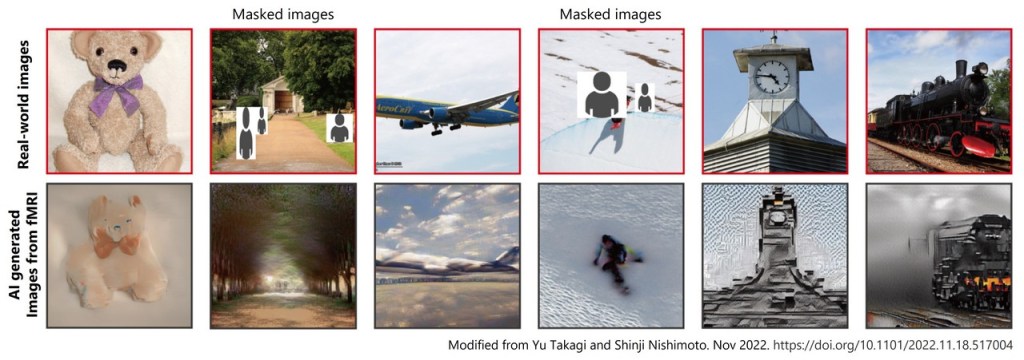
Artificial intelligence (AI) has made impressive strides in recent years, and one of the most intriguing applications of this technology is the ability to read people’s minds. Researchers are using advanced techniques such as functional magnetic resonance imaging (fMRI) to decode neural activity in the brain and reconstruct the images people see. This is an exciting development, as it offers a unique way to understand how the brain represents the world and the connection between computer vision models and our visual system.

One major challenge in this field is the reconstruction of realistic images with high semantic fidelity. While deep generative models have been employed for this task, the image reconstruction quality for real-world images remains a complex problem. One of the main difficulties is the variability of natural images, which require accurate reconstruction of color, shape, and higher-level perceptual features.

However, recent research has made significant progress in this area. For example, a study used a diffusion model to reconstruct real-world images from fMRI data, which reduces the computational cost of deep models while preserving high generative performance. This AI model even predicted objects hidden behind masks, similar to how our brain automatically processes this information (see the image below). Another study applied a variational auto-encoder neural network using a generative adversarial network unsupervised procedure to reconstruct face images from fMRI data. The system could perform robust pairwise decoding, accurate gender classification, and even decode which face was imagined rather than seen.

Despite these advancements, AI-based visual reconstruction still needs to address many challenges. The lack of a standardized evaluation procedure for assessing the reconstruction quality makes it difficult to compare existing methods. Additionally, the brain’s visual representations are invariant to different objects or image details, meaning brain activation patterns are not necessarily unique for a given stimulus object.

In conclusion, while AI may not yet be able to read your mind, researchers are making great strides in understanding how the brain processes visual information and reconstructing the images people see. This could have important implications for brain-computer interfaces and our understanding of the brain’s visual processing mechanisms.

Who knows what new advances in AI and neuroscience may bring next?

The Heart Beats True – The Souls Yearn for a Goal

Featured

In the heart of every young soul,
There burns a flame that makes them whole,
A reckless spirit, brave and bold,
That faces challenges untold.

They dream of a future, bright and clear,
A world where hope replaces fear,
And though the path ahead is steep,
Their determination runs deep.

Through trials and tribulations dire,
They face the flames, unquenched by fire,
With every step, they grow in strength,
A force that will go to great length.

Their hearts may ache, their feet may tire,
Yet they march on with a burning desire,
To make their dreams come true,
Never stopping to yearn for greed.

So here’s to the young and brave,
Whose reckless hearts will never cave,
May their flames forever burn,
As they face each challenge, and turn.

For in the end, their strength will shine,
A light that glows so bright, divine,
And though they face an endless fight,
They will emerge victorious in the light.

No More Nerdy Glasses with These Clinically Proven Non-Invasive Methods!

Featured

We’re sorry for the scientific jargon and numbers in this blog, but we wanted to make sure our information was accurate. We hope it didn’t make your brain hurt too much!

Go outdoors and play!

An international team of researchers conducted a study in China – the country reportedly is heavily affected by nearsightedness. They aimed to evaluate if increasing the time children spent outdoors at school could prevent the development of nearsightedness. Over a period of 3 years, the study added 40 minutes of outdoor activities for six schools and kept the activity levels unchanged for another six schools. The results showed that the children who spent more time outdoors had a lower incidence rate of nearsightedness. This study highlights the potential effectiveness of outdoor activities as an intervention to prevent nearsightedness in children. Citation: https://doi.org/10.1001/jama.2015.10803

Eye drops: low-concentration atropine

A study conducted in Hong Kong evaluated the effectiveness of low-concentration atropine eye drops in delaying the onset of myopia in children aged 4 to 9. The study administered eye drops of either 0.05% atropine, 0.01% atropine, or a placebo to the children for two years. Results showed that the group given 0.05% atropine had a significantly lower incidence of myopia and a lower percentage of participants with fast myopic shift compared to the placebo group. However, there was no significant difference between the 0.01% atropine and placebo groups. The study highlights the potential efficacy of low-concentration atropine eye drops for delaying the onset of myopia in children. Eye doctors are waiting to see the long-term safety and efficacy data. Citation: https://doi.org/10.1001/jama.2022.24162

What is atropine? Atropine is a medication commonly used to dilate the eye’s pupils for specific medical procedures. It works by blocking a chemical in the body that causes muscles to contract, and this can have different effects on the body depending on the dose and route of administration. In some cases, atropine can be used to treat other medical conditions, such as heart problems, but it can also have side effects and should only be used under the guidance of a healthcare professional.

Low-level red-light therapy

A new treatment called repeated low-level red-light therapy (mimicking the beneficial effects of sunshine) is studied for nearsightedness control. In a clinical trial with 112 children, those who received the red-light therapy had significantly less nearsightedness progression than those who used a sham red-light device with only 10% power. The low-level red-light therapy was administered at home and was well-tolerated with no reported adverse effects. The results suggest that low-level red-light therapy could effectively and safely control nearsightedness progression in children. Citation: https://doi.org/10.1016/j.ophtha.2022.08.024

Sleep: Your Secret Weapon Against Cancer

Featured

Research has suggested that there is a link between sleep and cancer risk. Lack of sleep or poor quality of sleep has been associated with an increased risk of certain types of cancer. Here are some ways in which sleep and cancer risk are associated:

  1. Melatonin production: Melatonin is a hormone produced by the body during sleep, and it has antioxidant properties that help protect against cancer. Disrupted sleep patterns can reduce the production of melatonin, which may increase the risk of cancer.
  2. Circadian rhythm: The body’s natural sleep-wake cycle, also known as the circadian rhythm, helps regulate many of the body’s processes, including hormone production, cell growth, and DNA repair. Disrupted sleep patterns can disrupt the circadian rhythm, increasing cancer risk.
  3. Immune system: Lack of sleep can weaken the immune system, making the body more vulnerable to cancer. The immune system plays a crucial role in identifying and eliminating cancer cells, so a weakened immune system may be less effective at preventing the development and spread of cancer.
  4. Lifestyle factors: Poor sleep quality can also lead to lifestyle factors associated with an increased risk of cancer, such as obesity, lack of physical activity, and an unhealthy diet.

Overall, while the research is still ongoing, it is important to prioritize good sleep hygiene and ensure that you get enough high-quality sleep to help reduce your risk of cancer and promote overall health and well-being.

Seeing Through the Haze: How I Overcame Myopia’s Emotional Challenges and Found New Clarity

As someone with myopia, or nearsightedness, I know firsthand the physical and emotional impact this condition can have. While the physical limitations of being unable to see distant objects clearly can be frustrating, the psychological effects can also take a toll on mental well-being.

One of the biggest challenges is dealing with low self-esteem. Feeling self-conscious about glasses or contact lenses, and worrying about how others perceive you, can be tough to handle. The inability to participate in activities that require good vision, such as sports or outdoor events, can also make you feel left out and isolated.

As a child, I struggled to see the board or read from a distance in school. This caused me to feel frustrated and inadequate, negatively impacting my academic performance. Over time, I realized that myopia is a common condition, and seeking appropriate treatment, such as corrective lenses or surgery, can help improve my vision and self-confidence.

It’s essential to raise awareness of the psychological impact of myopia among parents and children and to seek support from healthcare professionals if needed. With better understanding and support, individuals with myopia can manage the psychological effects of the condition and enjoy a fulfilling and healthy life.

Updated on 02 / 24 / 2023:
There are additional non-invasive and clinically proven methods for preventing the development and progression of myopia beyond the traditional approaches of corrective lenses and refractive surgeries. These new options include:
1. Spending more time outdoors
2. Using low-concentration atropine eye drops
3. Undergoing low-level red-light therapy

Note: If nearsightedness progresses quickly and starts early in life, it’s important to consult an eye doctor for further evaluation and treatment.

How Breast Milk Hormones Could Shape Your Little One’s Future (and Your Health Too!)

Breast milk is an excellent source of nutrition for babies, and it contains many hormones that could affect the baby’s growth and the mother’s health.

A recent study found that the concentrations of some of these hormones in breast milk are related to maternal health and baby growth. Women with gestational diabetes had lower concentrations of adiponectin and ghrelin, and higher concentrations of insulin in their breast milk. A higher body mass index (BMI) of the mother was also associated with higher concentrations of some hormones and lower concentrations of ghrelin in breast milk.

Interestingly, among the tested breast milk hormones, adiponectin was inversely associated with infant growth in both the GDM and healthy groups, suggesting it may play a role in down-regulating early infant growth. These findings highlight the important link between maternal health, breast milk hormones, and infant growth.

Want to read more? Follow this link: https://doi.org/10.1017/S0007114518002933

Mount Monadnock (NH) trail guide

Mount Monadnock is a popular hiking destination in New Hampshire, USA, with several trails to the summit. The best route to climb Monadnock Mountain depends on your experience level, fitness level, and available time. Here are a few options:

  1. White Dot Trail: This is the most popular and direct route to the summit and is well-marked with white blazes. It is a steep, rocky trail that requires some scrambling, but it offers excellent views and can be done in about 2-3 hours round trip. This trail is recommended for experienced hikers.
  2. White Cross Trail: This is a slightly longer and less steep route to the summit, but it is still challenging and requires good physical fitness. It is marked with white blazes and crosses the White Dot Trail several times. It can be done in about 3-4 hours round trip.
  3. Pumpelly Trail: This is a longer and more moderate route to the summit, with fewer crowds and more solitude. It offers great views and is marked with yellow blazes. It can be done in about 4-5 hours round trip.
  4. Dublin Trail: This is the longest and most gradual route to the summit, but it is still a challenging hike. It offers more wooded areas and streams than the other routes and is marked with red blazes. It can be done in about 5-6 hours round trip.

Regardless of your route, it is essential to wear appropriate hiking gear, including sturdy hiking shoes, layers of clothing, and plenty of water and snacks. It is also a good idea to check the weather forecast and trail conditions before setting out and to let someone know your hiking plans.

Fat Chance: The Surprising Link Between Obesity and Eye Health

Good news for anyone concerned about their eye health! Researchers have been tirelessly working to discover if there is a strong connection between obesity and eye health. This is because weight control is one of the most effective modifiable factors for human diseases such as cancer, cardiovascular diseases, and type 2 diabetes. And if we could identify the specific mechanisms that link body weight to eye conditions, it could provide us with valuable insights into related conditions and possible therapeutic targets.

So far, obesity has been linked to cataracts, diabetic retinopathy, and macular degeneration. And now, a new study has added glaucoma, a leading cause of blindness globally, to the list. Researchers found a significant connection between body weight and primary open-angle glaucoma (POAG), the most common form of glaucoma. They also discovered that both obesity and being underweight were associated with a higher risk of POAG, according to their thorough analysis of previous studies.

Furthermore, the researchers looked at the genetic links between obesity and POAG and identified several genes associated with both POAG and body mass index. This has provided some particularly promising targets for further investigation.

While more research is needed to fully understand the relationship between obesity and POAG, this study provides important insights into the connection between our overall health and our eyesight. So, whether you’re trying to lose weight or simply maintain a healthy lifestyle, taking care of your body could also be a key factor in protecting your vision. Let’s make healthy choices for our bodies and our eyes!

Want to read more? Follow this link: https://doi.org/10.3390/ijms24043925